Learn how to turn short answers into confident, extended responses in IELTS Speaking Part 1 — the part about you, your home, work and hobbies.
About 22 minutes
What Part 1 Really Tests
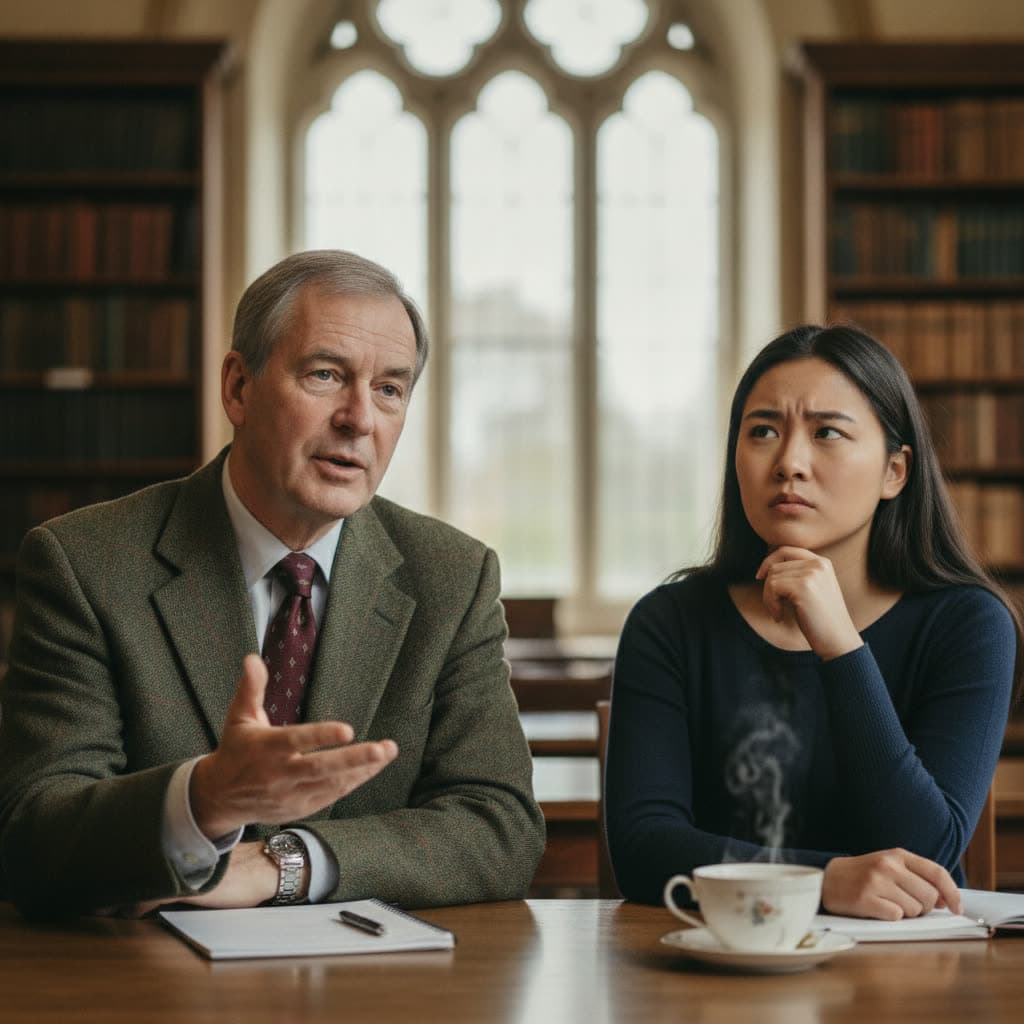
In IELTS Speaking Part 1, a British examiner asks you simple questions about familiar topics — your hometown, your work or studies, and your free time — for about 4 to 5 minutes. The questions are easy, but that's the trap: most candidates give one-word answers and lose easy marks. The examiner isn't testing whether you have an interesting life; they are testing whether you can speak naturally and keep going. In the UK, conversational fluency is highly valued, and being able to expand on a basic point shows true competence. The single best habit you can build is this: never stop at one sentence.
Türkçe
IELTS Speaking Bölüm 1'de, İngiliz bir sınav görevlisi size memleketiniz, işiniz veya eğitiminiz ve boş zamanlarınız gibi tanıdık konularda yaklaşık 4-5 dakika boyunca basit sorular sorar. Sorular kolaydır, ancak asıl tuzak da budur: çoğu aday tek kelimelik cevaplar vererek kolay puanları kaybeder. Sınav görevlisi ilginç bir hayatınız olup olmadığını test etmez; doğal bir şekilde konuşup konuşamadığınızı ve sohbeti sürdürüp sürdüremediğinizi test eder. İngiltere'de karşılıklı konuşma akıcılığına çok değer verilir ve temel bir konuyu genişletebilmek gerçek bir yetkinlik göstergesidir. Edinebileceğiniz en iyi alışkanlık şudur: asla tek bir cümlede durmayın.
Useful Part 1 Language
English
Türkçe
hometownMy hometown is a coastal city in the west of Turkey, but I live in London now.
memleket / doğup büyüdüğün şehirMemleketim Türkiye'nin batısında bir sahil kenti, ancak şu an London'da yaşıyorum.
to commuteI commute to the office by train, which takes about forty minutes each way.
işe/okula gidip gelmekİşe trenle gidip geliyorum; bu da tek yön yaklaşık kırk dakika sürüyor.
I'd sayI'd say I'm quite a sociable person, to be honest.
şöyle söyleyebilirim / benceDürüst olmak gerekirse oldukça sosyal bir insan olduğumu söyleyebilirim.
to be keen onI'm really keen on photography in my spare time.
bir şeye meraklı olmak / çok sevmekBoş zamanlarımda fotoğrafçılığa gerçekten çok meraklıyım.
to take upI took up running last year to stay healthy and enjoy the outdoors.
(bir hobiye/işe) başlamakSağlıklı kalmak ve açık havanın tadını çıkarmak için geçen yıl koşuya başladım.
The Answer + Reason + Example Pattern
The fastest way to extend any Part 1 answer is to add a reason and an example using linking words. This proves you have the fluency to maintain a conversation.
Golden Rule: Never One Sentence
✓ Yes, I love the summer, especially the long evenings. For instance, I can go for a walk after work.
✗ Yes, I like the summer.
🔒
Activity — Extending Your Answers
Fill the gaps and check your answers as you go. Free account needed.
In the Exam Room
Examiner: Let's talk about your hometown. Where are you from?
Candidate: I'm from Izmir, which is a coastal city in the west of Turkey. I'd say it's quite relaxed, because it's right by the sea.
Examiner: Do you work or are you a student?
Candidate: I work, actually. I'm a marketing assistant, and I commute to the office by train every morning.
Examiner: Is your commute very long?
Candidate: It takes about forty minutes, which means I have plenty of time to read or listen to podcasts on the way.
Examiner: What do you like to do in your free time?
Candidate: I'm really keen on photography. I took it up a couple of years ago, and nowadays I go out most weekends to take photos.
Examiner: What kind of things do you usually photograph?
Candidate: Mostly street scenes and old architecture — for instance, the historic clock tower in the city centre.
Examiner: Do you prefer spending time indoors or outdoors?
Candidate: Outdoors, definitely, because I love being active. To be honest, I get quite restless if I'm stuck inside all day.
The British Love of "Waffling" (in Moderation)
In the UK, giving a very short, direct answer can sometimes seem a bit abrupt or even rude. British people naturally tend to soften their answers by adding a bit of extra detail or a polite explanation. This is informally known as "waffling", though in an exam, you want to keep it relevant! When you add a reason and an example in IELTS Part 1, you aren't just showing off your grammar; you are actually mimicking natural British conversation patterns. Just remember not to talk for too long — two or three sentences are perfectly polite.
Türkçe
Birleşik Krallık'ta çok kısa ve doğrudan bir cevap vermek bazen biraz kaba veya ani görünebilir. İngilizler, biraz ekstra ayrıntı veya kibar bir açıklama ekleyerek cevaplarını yumuşatma eğilimindedir. Buna gayriresmi olarak "waffling" (lafı uzatmak/boş konuşmak) denir, ancak bir sınavda konudan sapmamanız gerekir! IELTS Bölüm 1'de bir neden ve örnek eklediğinizde, sadece dilbilginizi sergilemekle kalmaz, aynı zamanda doğal İngiliz konuşma kalıplarını taklit etmiş olursunuz. Sadece çok uzun süre konuşmamayı unutmayın — iki veya üç cümle son derece kibar ve yeterlidir.
🔒
Practice IELTS Speaking Part 1 with Emma
Say it out loud to a British AI tutor and get feedback on your pronunciation. Free account needed.
🔒
Write Your IELTS Part 1 Summary
Write your answer and have it marked, with corrections. Free account needed.
Now actually practise it
Reading a lesson is the easy half. A free account unlocks the parts that make it stick — listen to every word in a British accent, test yourself on the quiz, and use it in a live conversation with Emma. Your progress is saved and the words come back for review before you forget them.